
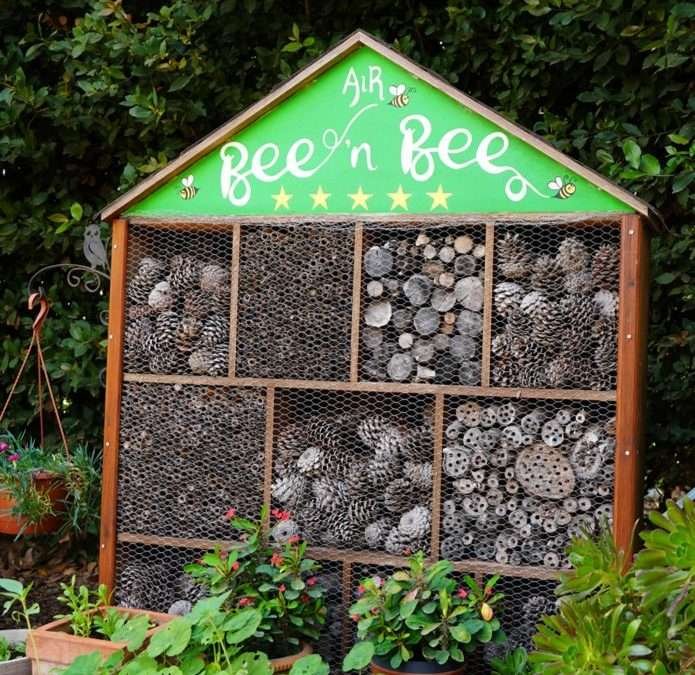
Welcome to the Air Bee ‘n’ Bee: A Tiny Hotel with a Big Purpose
Tucked away among the herb gardens of Cyherbia Botanical Park is one of our smallest attractions—but perhaps one of the most important.
Our Air Bee ‘n’ Bee Hotel isn’t designed for human guests. Instead, it provides shelter and nesting space for solitary bees and other beneficial insects that help keep our gardens, farms, and wild landscapes healthy.
While honeybees often receive most of the attention, they are only one part of Cyprus’ pollinator community. Hundreds of species of wild bees live across the Mediterranean, many of which lead solitary lives. Unlike honeybees, they do not live in large colonies or produce honey. Instead, each female builds and provisions her own nest, often inside hollow stems, dead wood, cracks in walls, or tunnels in the ground.
As natural nesting sites disappear due to urban development, intensive agriculture, and habitat loss, insect hotels can provide valuable refuge for these important pollinators.
Why Do Bees Need Hotels?
Over the last century, flowering meadows, hedgerows, and wild habitats have declined dramatically throughout Europe. Many pollinating insects now struggle to find suitable nesting places.
A bee hotel helps replace some of these lost habitats by providing safe spaces where cavity-nesting insects can lay their eggs and raise the next generation.
At Cyherbia, our Air Bee ‘n’ Bee is part of a wider effort to support biodiversity within the gardens. Combined with our flowering herbs, woodland areas, ponds, and pesticide-free management practices, it creates a welcoming environment for pollinators throughout the year.
Who Checks In?
Despite the name, our hotel welcomes more than just bees.
You may find:
- Solitary Bees
These include Mason Bees, Leafcutter Bees, and other native species that nest in hollow stems and tunnels.
- Ladybirds
Both adults and larvae feed on aphids and help protect plants naturally.
- Lacewings
Often called “aphid lions” during their larval stage, lacewings are valuable predators of garden pests.
- Small Wasps
Many solitary wasps use insect hotels. Unlike social wasps, these species are generally harmless to people and help control pest insects.
- Beetles and Other Beneficial Insects
Various species may use the hotel as temporary shelter or overwintering habitat.
How Does It Work?
The Air Bee ‘n’ Bee is built using natural materials such as:
- Hollow bamboo canes
- Dried plant stems
- Small pieces of wood with drilled holes
- Twigs and reeds
Different insect species prefer different tunnel sizes. Some bees choose narrow openings just a few millimetres wide, while others require larger chambers. When a female solitary bee finds a suitable tunnel, she creates a series of chambers inside. In each chamber she lays a single egg and provides a food supply made from pollen and nectar. She then seals the chamber with mud, leaves, or plant material before creating the next one. The larvae hatch and feed on the stored food before developing safely inside the tunnel.
A Year in the Life of the Hotel
Spring
The first solitary bees emerge from the nests where they spent the winter. Adults begin searching for mates and suitable nesting sites.
Summer
This is the busiest season. Bees actively collect pollen and nectar while building nests and laying eggs.
Autumn
The developing larvae transform into pupae within the safety of their chambers.
Winter
Most occupants remain dormant inside the hotel, protected from the elements until warmer temperatures return.
Food, Water, and Shelter
A hotel alone is not enough. Pollinators also need a reliable supply of food throughout the year. This is why Cyherbia grows a wide variety of flowering herbs and plants that bloom across different seasons.
Lavender, rosemary, sage, thyme, oregano, marjoram, and countless wildflowers provide nectar and pollen for visiting insects. Water is equally important. Bees require shallow water sources, while some species use mud to construct and seal their nests. Together, food, water, and shelter create the conditions needed for healthy pollinator populations.
Why Solitary Bees Matter
Although they are often overlooked, solitary bees are among the world’s most effective pollinators. Many species can pollinate flowers more efficiently than honeybees, helping fruit trees, vegetables, herbs, and wild plants reproduce. Unlike honeybees, solitary bees are generally non-aggressive. They do not defend a hive and rarely sting, making them excellent neighbours in gardens, parks, and educational spaces. Without pollinators, many of the plants we rely on for food, medicine, and wildlife habitat would struggle to survive.
Visit the Air Bee ‘n’ Bee
Next time you visit Cyherbia Botanical Park, take a closer look at our Air Bee ‘n’ Bee Hotel. You may spot a bee carrying pollen into a bamboo tunnel, a ladybird exploring the reeds, or a lacewing searching for a place to rest. These tiny guests are easy to overlook, yet they play an enormous role in supporting life within the gardens. The Air Bee ‘n’ Bee reminds us that conservation doesn’t always require vast nature reserves. Sometimes, protecting biodiversity begins with something as simple as a hollow stem, a flowering herb, and a safe place to call home.
Build Your Own Bee Hotel
Inspired by our Air Bee ‘n’ Bee Hotel? Why not create one at home and provide a safe nesting space for solitary bees in your own garden, balcony, school, or community space?
Building a bee hotel is a simple and rewarding way to support local pollinators. With a few natural materials such as bamboo canes, hollow stems, untreated wood, and a sunny location, you can create a habitat that may be used by solitary bees for many years.
Remember:
- Place your bee hotel in a sunny, sheltered position facing south or southeast.
- Keep it dry and securely mounted.
- Plant bee-friendly flowers nearby to provide nectar and pollen throughout the seasons.
- Avoid using pesticides in the surrounding area.
Download Free Guides
English Guide
How to Make a Solitary Bee Hotel (BEEsPOKE Project)
Greek Guide
Πώς να Φτιάξετε Ένα Ξενοδοχείο για Μοναχικές Μέλισσες (WWF Ελλάς)
These guides provide step-by-step instructions, recommended materials, and practical tips to help you create a safe and effective home for solitary bees.
Every bee hotel, no matter how small, contributes to a larger network of habitats that help support pollinators and biodiversity across Cyprus.
Note: Don’t use the chrome-extension:// links on your website. Instead, upload the PDFs to your WordPress Media Library and link directly to them, or link to the original PDF URLs if they are publicly available. The chrome-extension:// addresses will only work on your own computer and will be broken for visitors.