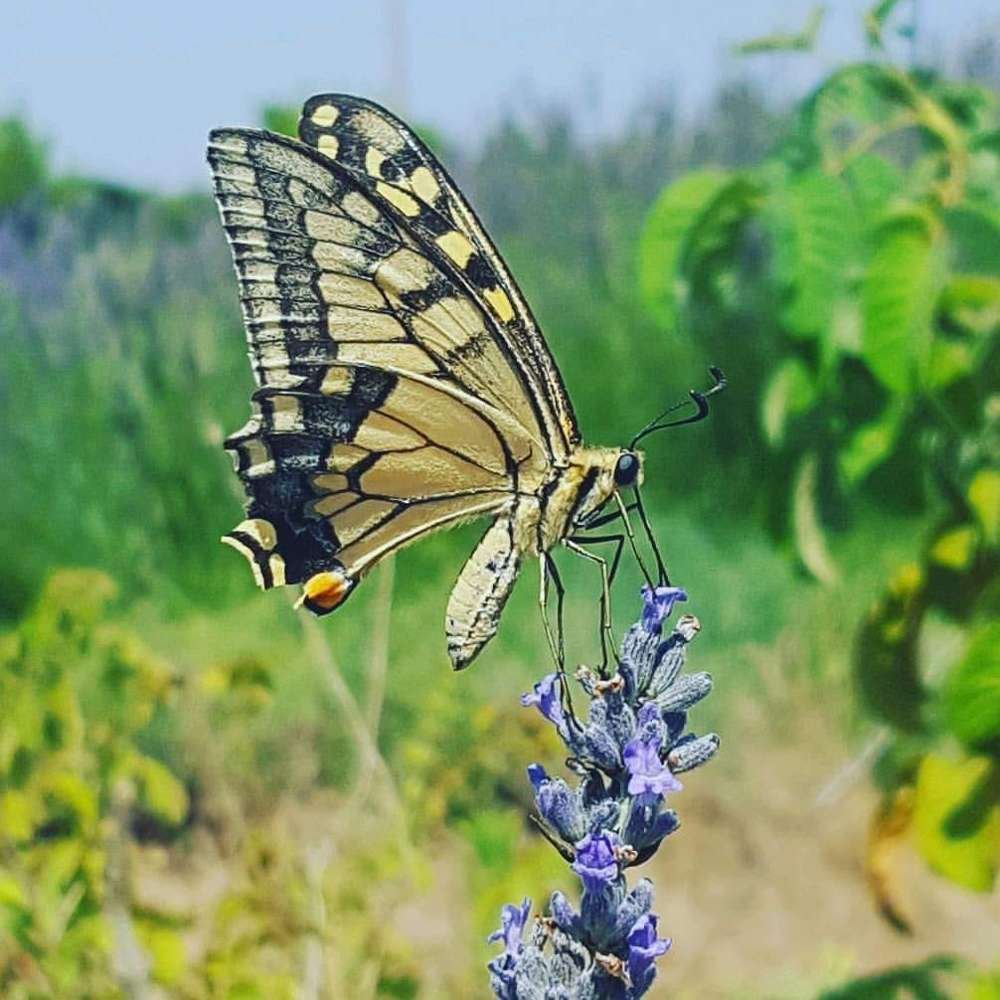
Few sights in nature are as uplifting as a Swallowtail butterfly (Papilio machaon) gliding through a garden. With its elegant wings and graceful flight, it is one of the most striking pollinators found in Cyprus. At Cyherbia Botanical Park, we are proud to play a small role in helping these beautiful insects complete their remarkable life cycle.
Throughout the warmer months, Swallowtail butterflies lay their eggs on fennel plants, one of their favourite host plants. Once the eggs hatch, tiny caterpillars emerge and begin feeding on the fennel leaves and stems. While nature has its own balance, many caterpillars never reach adulthood due to predators such as birds and lizards.
To give some of them a helping hand, we carefully collect fennel stems that already have Swallowtail caterpillars feeding on them and place them inside our butterfly hatchery. Here they can continue their development in a protected environment while still feeding on their natural food source.
Watching the transformation is nothing short of magical. During their caterpillar stage, which lasts approximately 15–20 days, the caterpillars molt four times and grow at an astonishing rate. From tiny hatchlings, they quickly become large, colourful caterpillars, consuming vast amounts of fennel as they prepare for the next stage of their journey.
When ready, the caterpillar attaches itself securely and begins the process of becoming a chrysalis. This transformation takes around two days. Inside the pupa, one of nature’s greatest miracles unfolds. Over the following 15–20 days, the caterpillar’s body reorganises itself completely, eventually emerging as a fully formed butterfly.
The day a butterfly emerges from its chrysalis is always special. At first its wings are soft and crumpled. Gradually they expand and harden as fluid is pumped through the wing veins. Once strong enough to fly, the butterfly takes its first flight into the gardens.
As soon as the butterflies are ready, we release them back into nature where they can fulfil their important ecological role. They pollinate flowers, contribute to healthy ecosystems, find mates, and lay eggs that will become the next generation of Swallowtails.
Pollinators around the world face increasing challenges from habitat loss, pesticides, and climate change. Butterflies are not only beautiful to observe; they are important indicators of environmental health. By creating habitats rich in nectar plants and providing a safe space for some caterpillars to develop, we hope to contribute in our own small way to the conservation of these remarkable insects.
Visitors to Cyherbia often have the opportunity to see caterpillars, chrysalises, and sometimes even newly emerged butterflies in our hatchery. For many children, it is their first time witnessing the incredible transformation from caterpillar to butterfly, a reminder of the wonders that exist all around us when we take the time to look closely.
Every butterfly released is a small success story, and every visitor who leaves with a greater appreciation for pollinators becomes part of that story too.
The next time you visit Cyherbia, take a moment to stop by the butterfly hatchery and see where the magic happens.